

Going Beyond Words
Even with our eyes shut, images persist

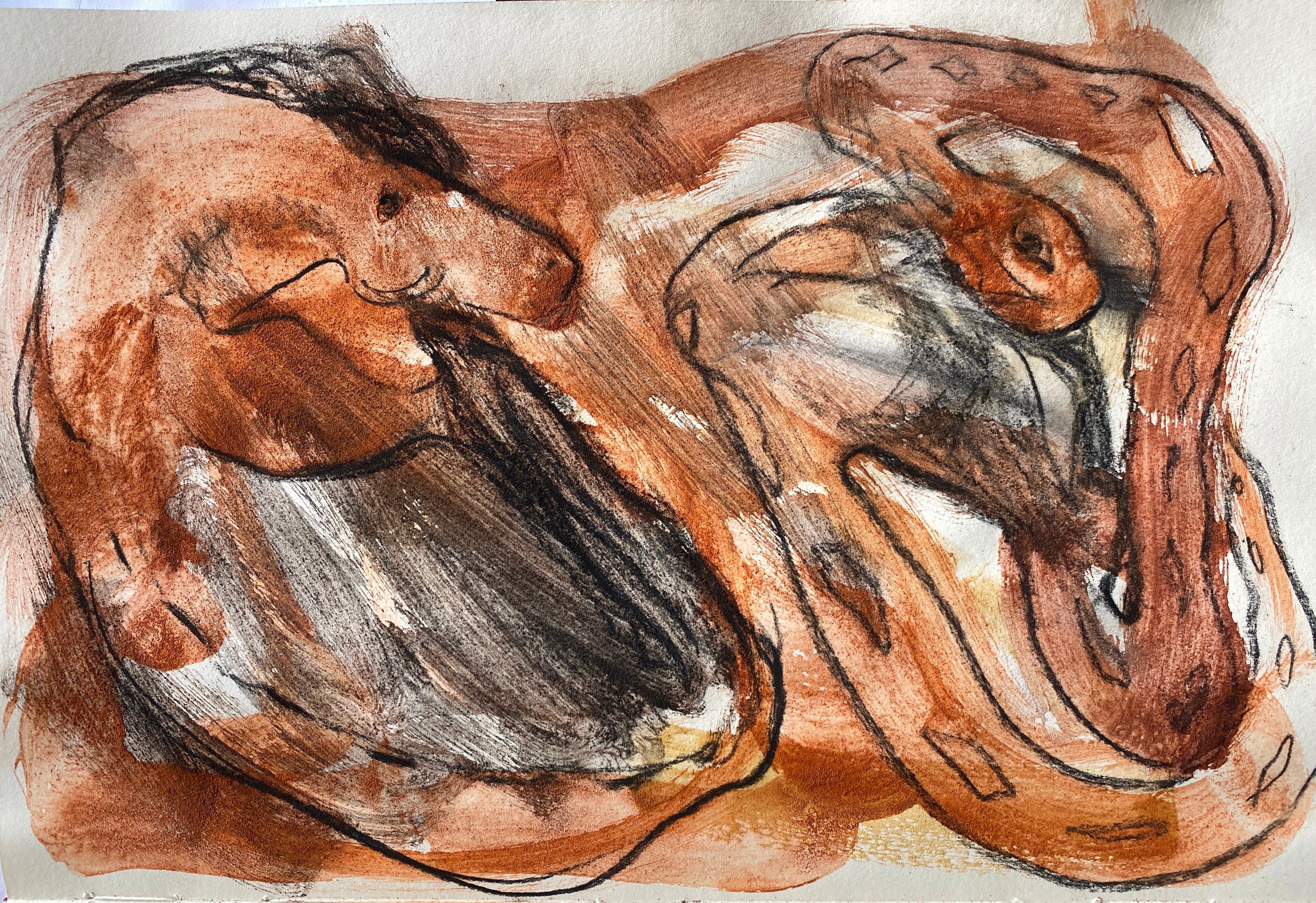
This week, the next in my occasional visual posts, drawings from many years of keeping notes and making sketches from dreams. Ineluctable modality of the visible. I dream vividly most nights, and always have done. I usually remember them but this year, for some reason, I am not recording them. I don’t mind, and besides, I trust this inner wisdom to record or not to record. It has the same mouth feel as ‘to tell, or not to tell’.
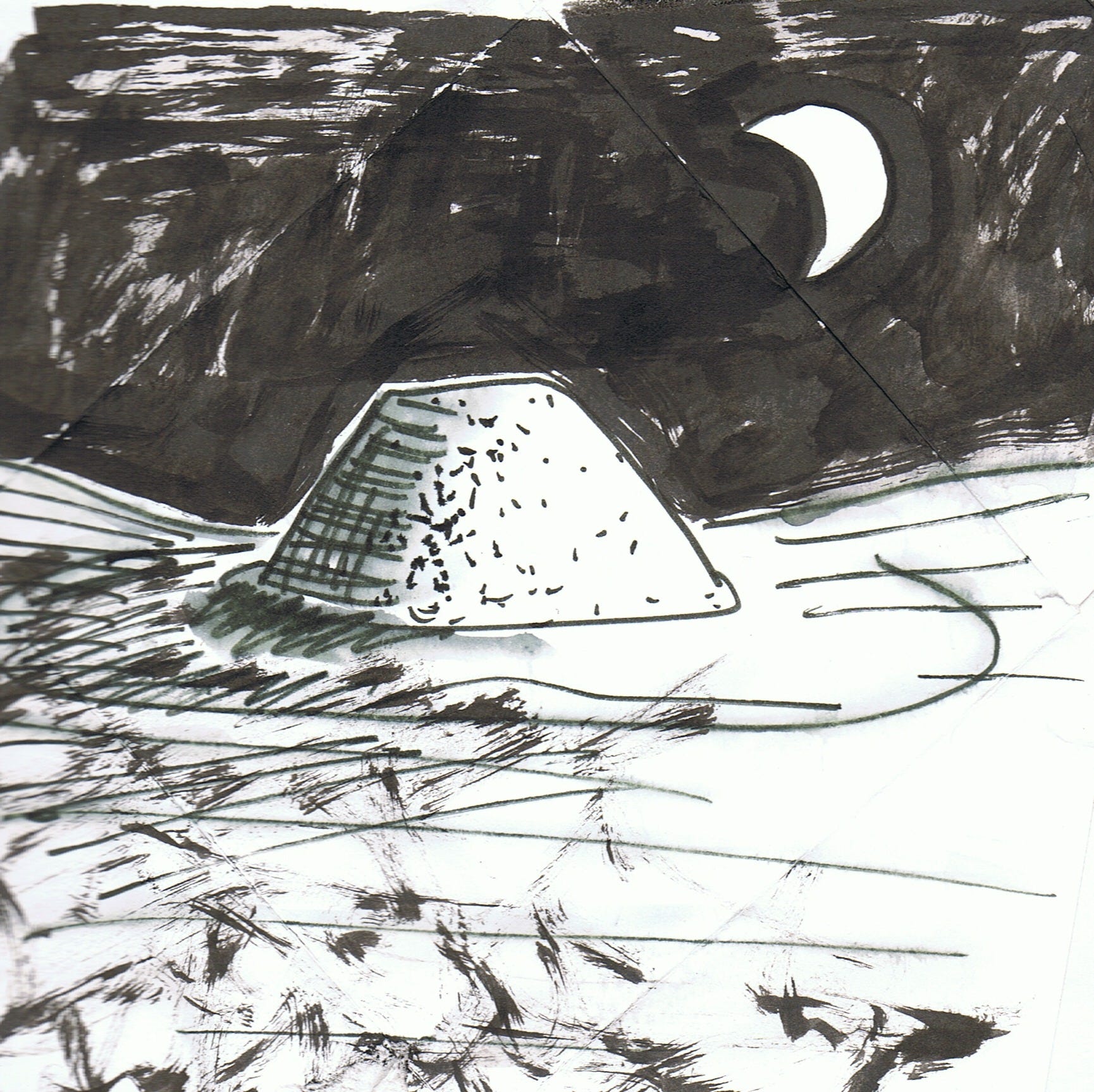
If you want to remember your dreams more easily, I have posted a very effective method here. When I share such images I don’t generally explain or date them. Some are quick scribbles on an opened-out envelope, with whatever pen is to hand.
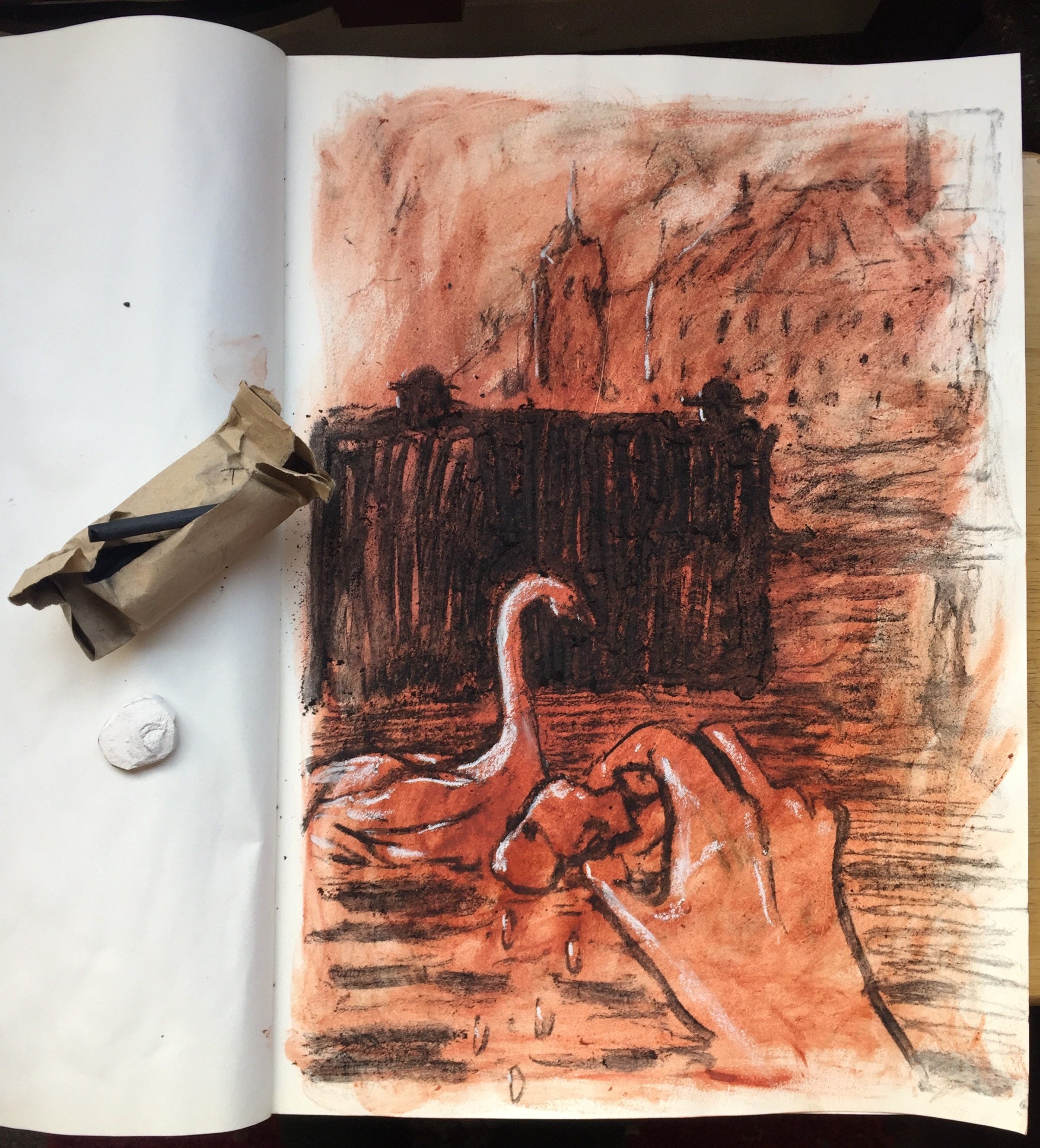
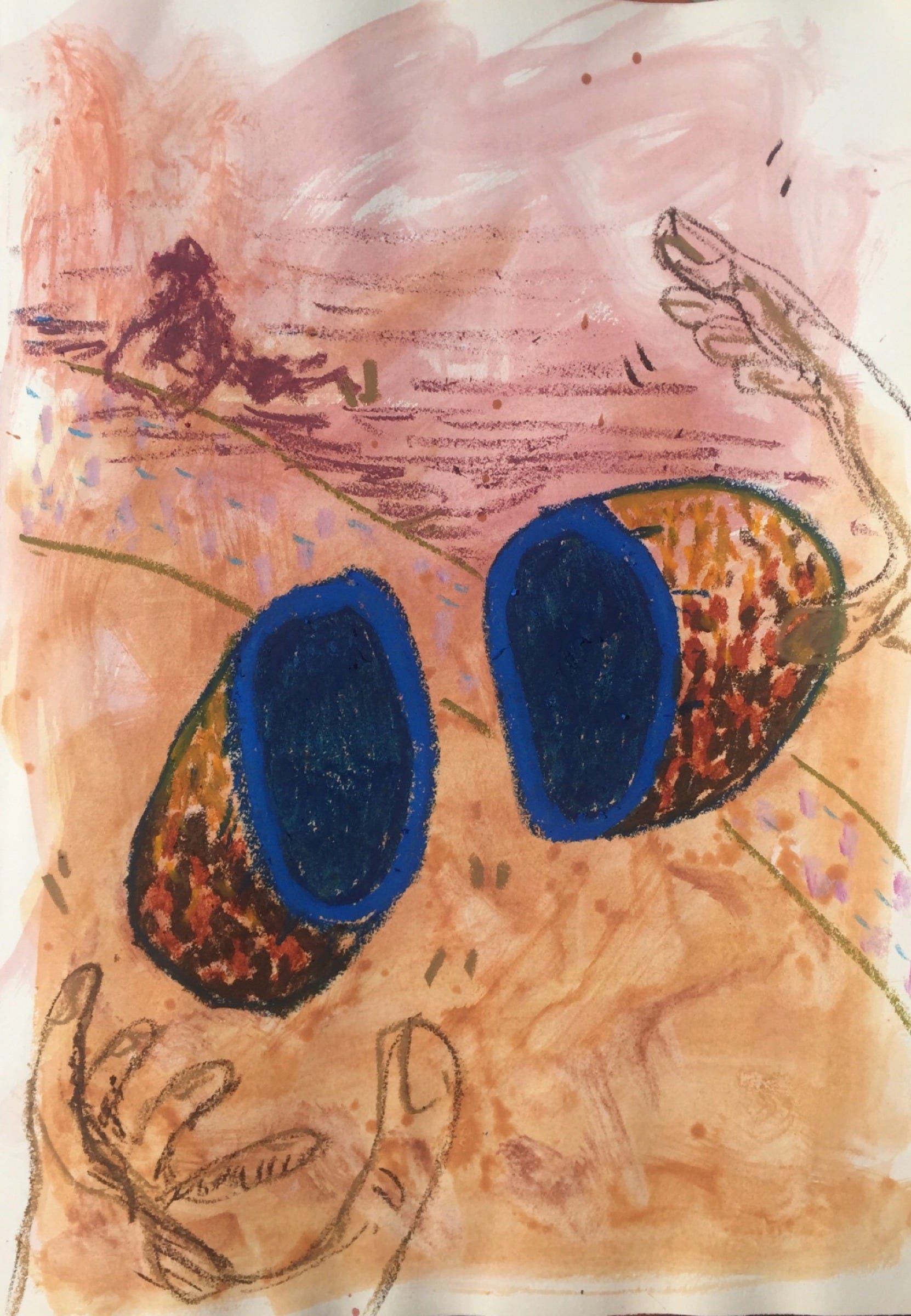
Others are layered charcoal drawings on one of the many prepared papers and sketchbook pages I have covered with loose brushings of ochre paint, (which is how I clean my palette and create a no-waste art practice). These roughly worked backgrounds are like cave walls to me, something that is not carefully created by ‘my will’ but is somewhat random compared to a blank page, and therefore far more suggestive and less intimidating to work on. Our ancestors worked on rocks, cliffs and cave walls, also with ochre, charcoal and chalk, embellishing and utilising the shapes weathering and eons of time had provided.1 I find that once dried, the powdered stone pigments from cleaning my muller and slab, palettes and brushes, mixed with a little gum Arabic, to be the perfect ground on which the images I see with my eyes closed can land.
Dreams are not arguments. Arguments are not really arguments; someone’s way is what convinces you, or not. The problem with LLMs is not only their truthfulness regarding reportable facts. The issue is their lack of fidelity. For humans, words are not only tokens, they pertain to real things. In a token system, such as ‘machine learning’, there is no apprehension of a possible ‘truth’ of things, only greater or lesser probabilities of the next token aptly fitting in a sequence. I will not trust an entity which cannot recognise the embodied and embedded, even nested, truths and nuances of what words point towards, any more than I would trust a person who displays this behaviour.
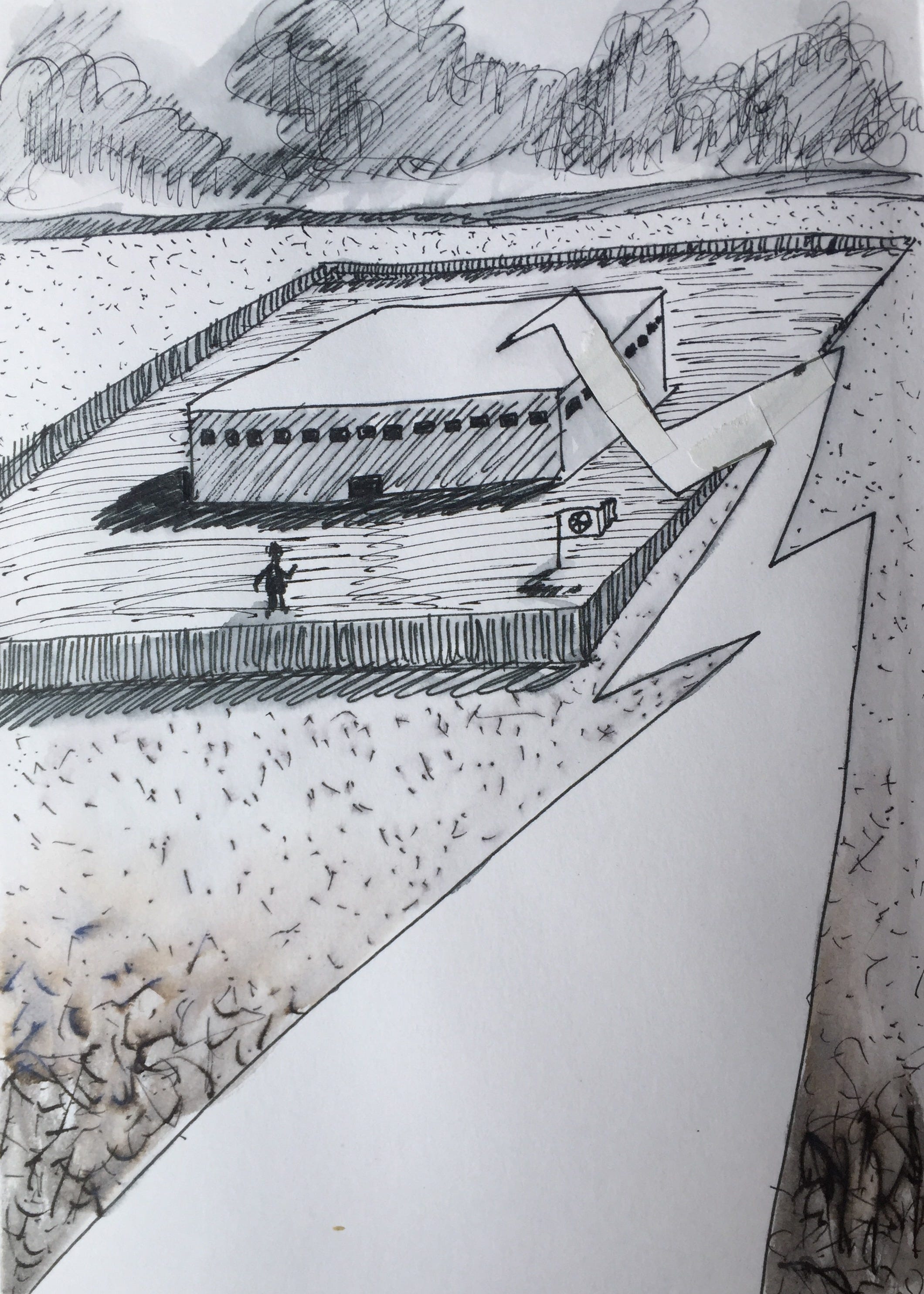
By this way of seeing things, these drawings are extremely faithful renderings of my dreams, even though I can tell you that the images in my head while dreaming, which I can still recall vividly, did not look exactly like this. By moving my hand with my intent, while holding in my mind’s eye the image I wish to record, an evocation of the image, the mood and the content of the dream are constellated. It is the ragged wild twin of photorealism.
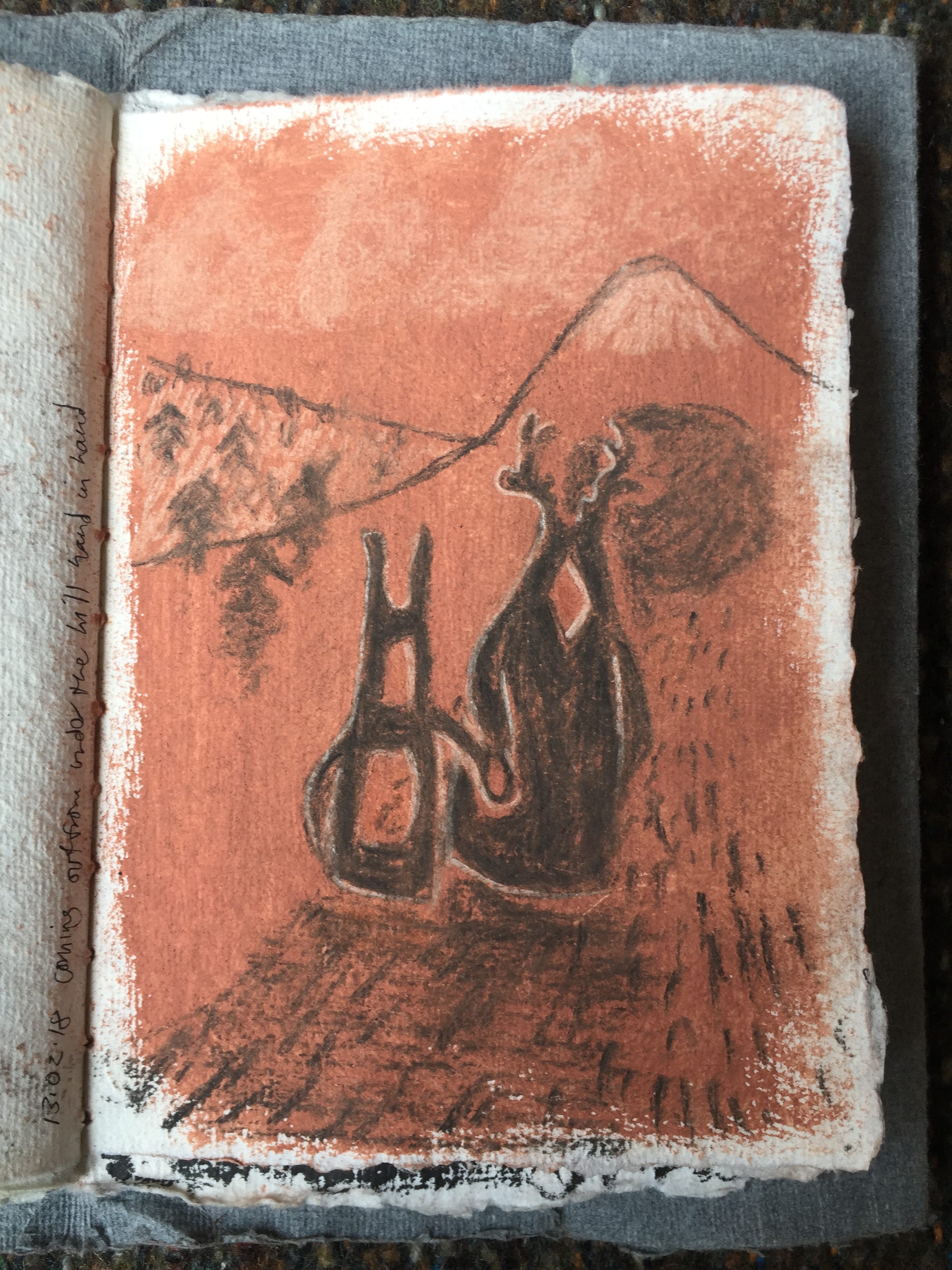
I say ‘constellated’, as it is related to the process by which all peoples have seen mythical figures, gods and stories in the stars. The Word without the Image is an orphan and an only child, it makes Jack a dull boy. Trying to make a dream drawing ‘look good’ kills it, I have to let it be as gauche or as messy as it is. No revisions can take place.
A good drawing is like a hearty greeting. ‘Put everything into the initial connection.’2
On a tangent, but also pertinent, recently a good online friend wrote to say that now is not the time to be encouraging people to trust in small friendship groups or other groupings formed of affinity, that this has survivalist undertones, that betrayals and harms can come from local groups, that aloofness and vigilance to the wendigo spirit of the age is essential, and best done as a hermit.
I acknowledge the well-founded fear in this query. However, I feel there’s room for both the hermit way and the gather-together way and they come down to a matter of personal preference, one’s history and character. The current culture I live in prides personal success and individuality above all else but I feel this is one of the causes of the deep sickness in British (and Anglophone in general) society. My own journey has been from loner to joiner-in, yours may be from overly-enmeshed to far more self-reliant. Both are routes towards more sanity and equilibrium, as the original context and the pushes life has brought differ wildly from person to person. I would not encourage anyone to go against their own experience or inner knowing. In fact, I’d go so far as to say that the only thing I would ‘encourage everyone to do’ is this: pay attention to the disposition of your heart. Iain McGilchrist talks about it beautifully at the end of the conversation linked below and it is at the centre of what I care about.
Even on our own, we are still in relationship. Control, coercion, shaming, harm, banishment - these can happen when you are entirely alone. We carry our way of relating in us as closely as our tone of voice. In being-in-relationship, whether with people, creatures, land, ideas, family, God, our own hearts, we will always risk estrangement and misunderstanding. Every action carries risk.
Having experienced what feels like the best and the worst of what people have to offer, my heart still chooses connexion, and so that’s where I write from. Your mileage may very, as they say. Over the last few years I’ve survived and then thrived after some rough run-ins with a landlord, freak weather, trolls, health and a partner, so I can sympathise with the hermit urge. But for me (and my siblings, as we discussed this only days ago…) post-difficulty growth seems to be how things roll for us. We can’t explain it and we don’t rely on it, we are just grateful for it.
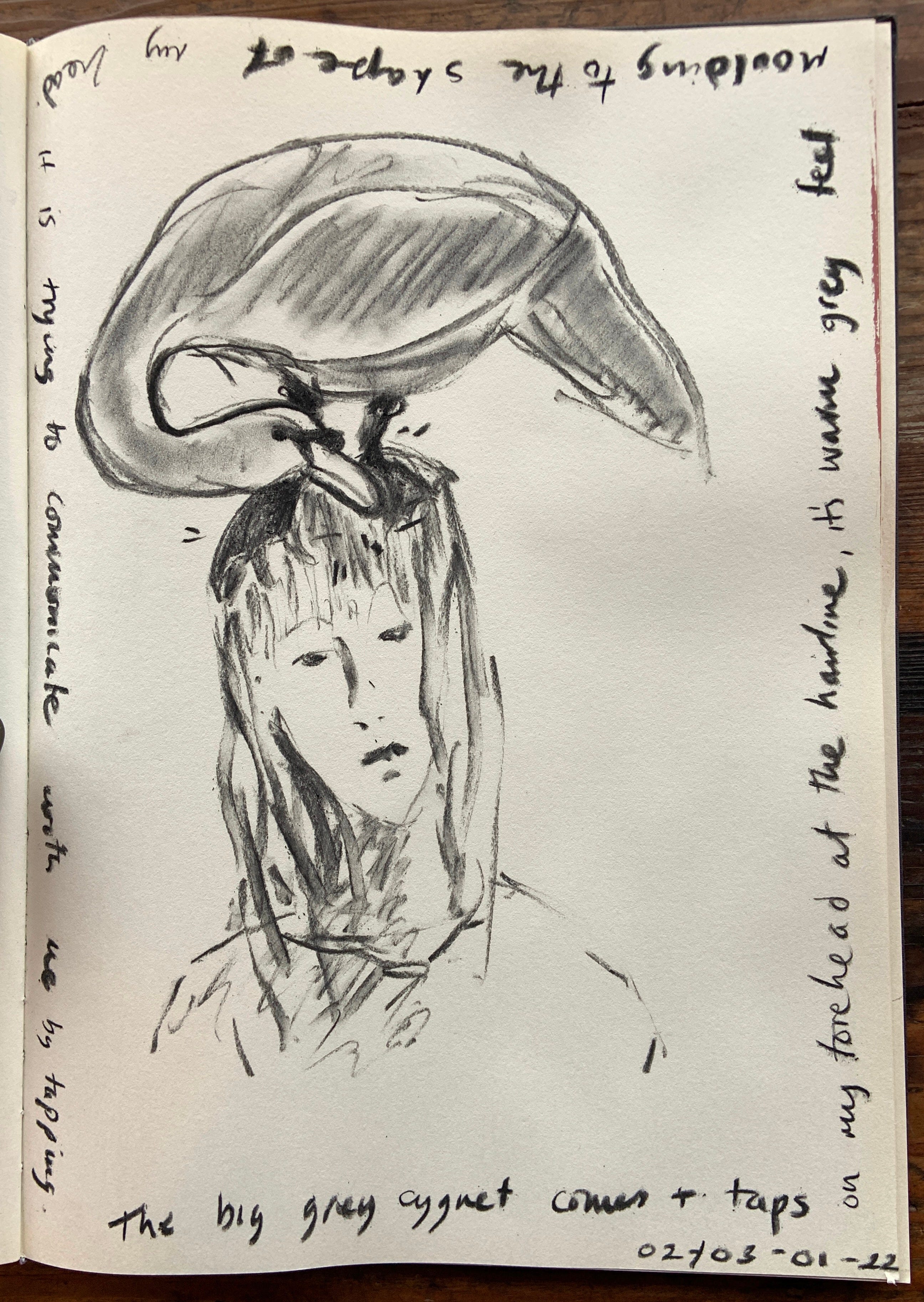
Uncivil Savant is where I think out loud. Like these drawings today, my writings are faithful evocations of my own internal processes, rather than clear instructions for assembling a machine, or even a society. Instead, I would suggest we all attend to our own consciences, connect to what inspires our longing, measure our ideas against reality, and make moves towards freedom based on what we comprehend.
I wish you all greatest of luck with your mission!

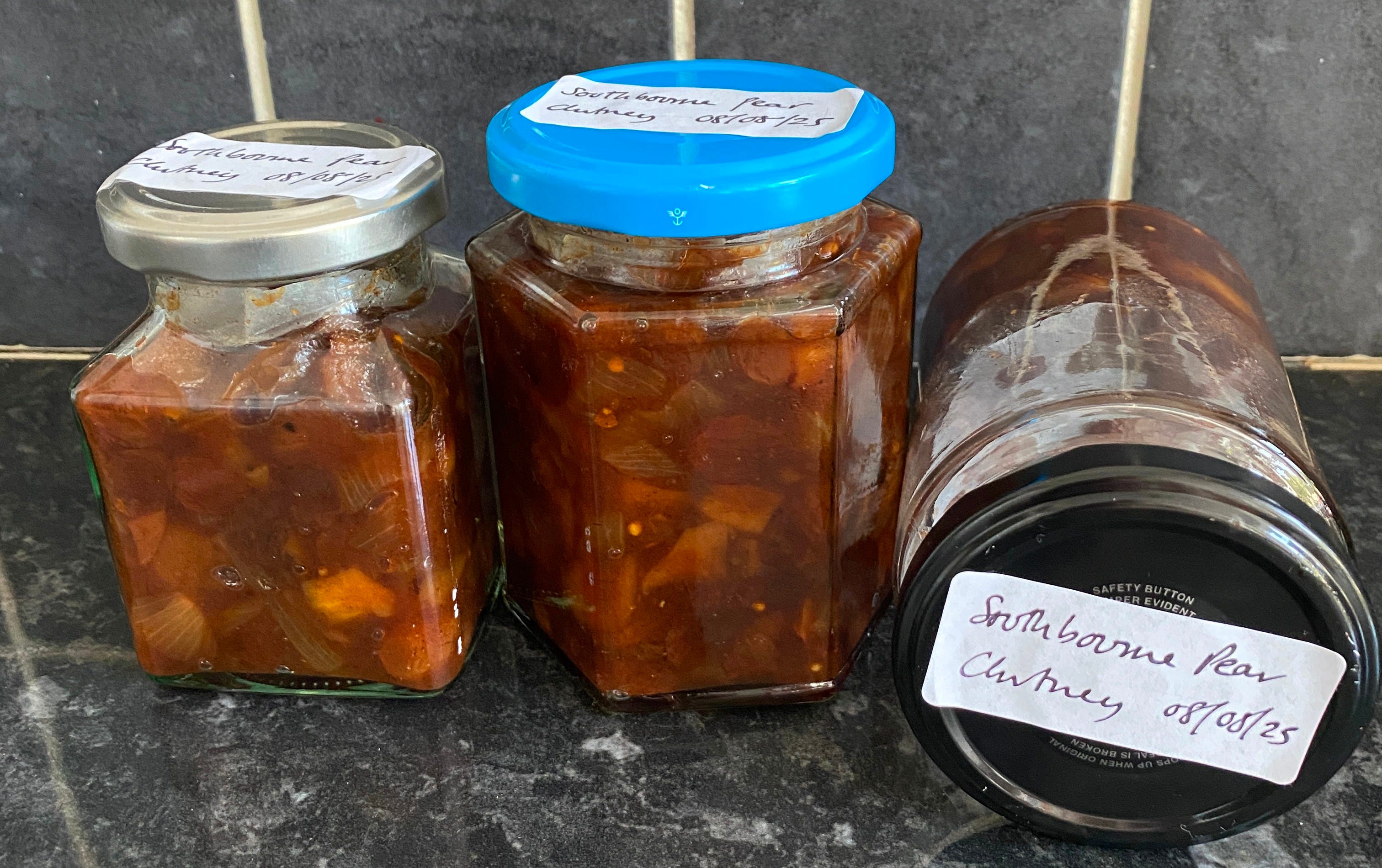
This week’s good thing: It is chutney time. I’ll soon be moving, so I am taking a little of the windfall pears and apples from next door with me, mellowed and ready to eat by October. It’s adapted from my favourite traditional chutney recipe from Delia Smith. However, you can substitute many of the ingredients for what is locally abundant, just stick to the weights, use very dark sugar and malt vinegar, and you can’t go wrong. It can also take up to twice the time it says, depending on pan, heat source, etc. Serve with ham or in cheese sarnies.
A quote from my T’ai Chi Grandmaster John Kells that I think about almost every day.
You are to be interviewed on The Machine Sessions Caroline? I look forward to that - I watched Paul’s interview with Iain McG yesterday and it is superb. Highly recommend to all.
A good drawing is like a hearty greeting. ‘Put everything into the initial connection.’²
Oh yes, definitely!
In my 3 decades as an illustrator of books and magazines, the exciting part was the blank page with pencil in hand, the ‘roughs’ as those initial connections to the brief were called. The rest was just work, sitting alone with radio 4 in the studio, redrawing and making them neat for the clients and losing the spontaneity, earning a living.
Then the switch to teaching internal arts… the initial non-verbal contact in the room full of expectant students, the depth of subtle consciousness contact in meditation, the offering of a physical touch point in ‘sensing hands,’ all of those things require that element of opening up and awakening the senses.
What a lovely way to express it, thanks for sharing. I hope your move goes well and you can put your all into the arrival.